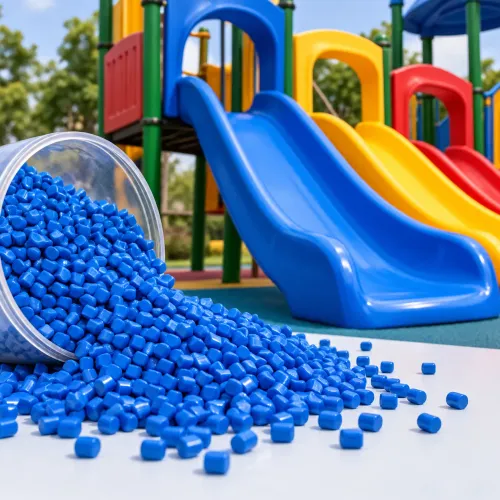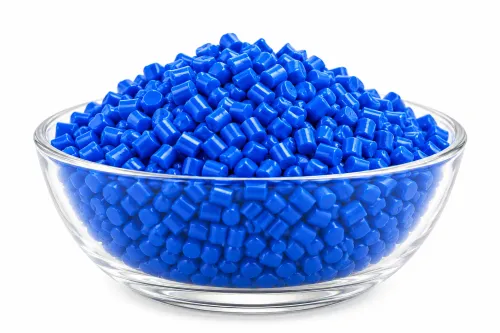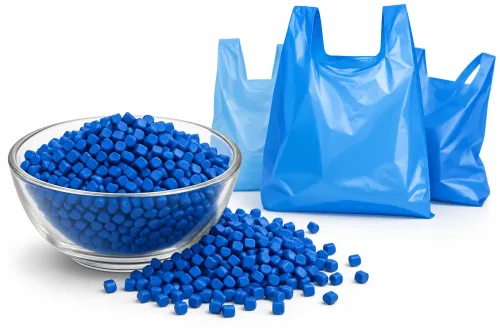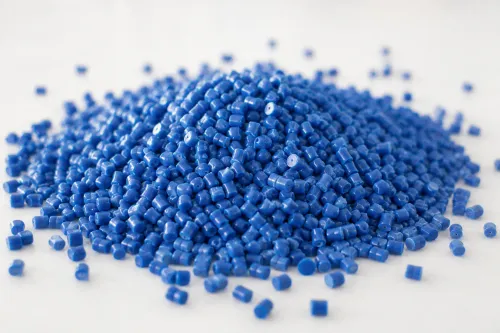
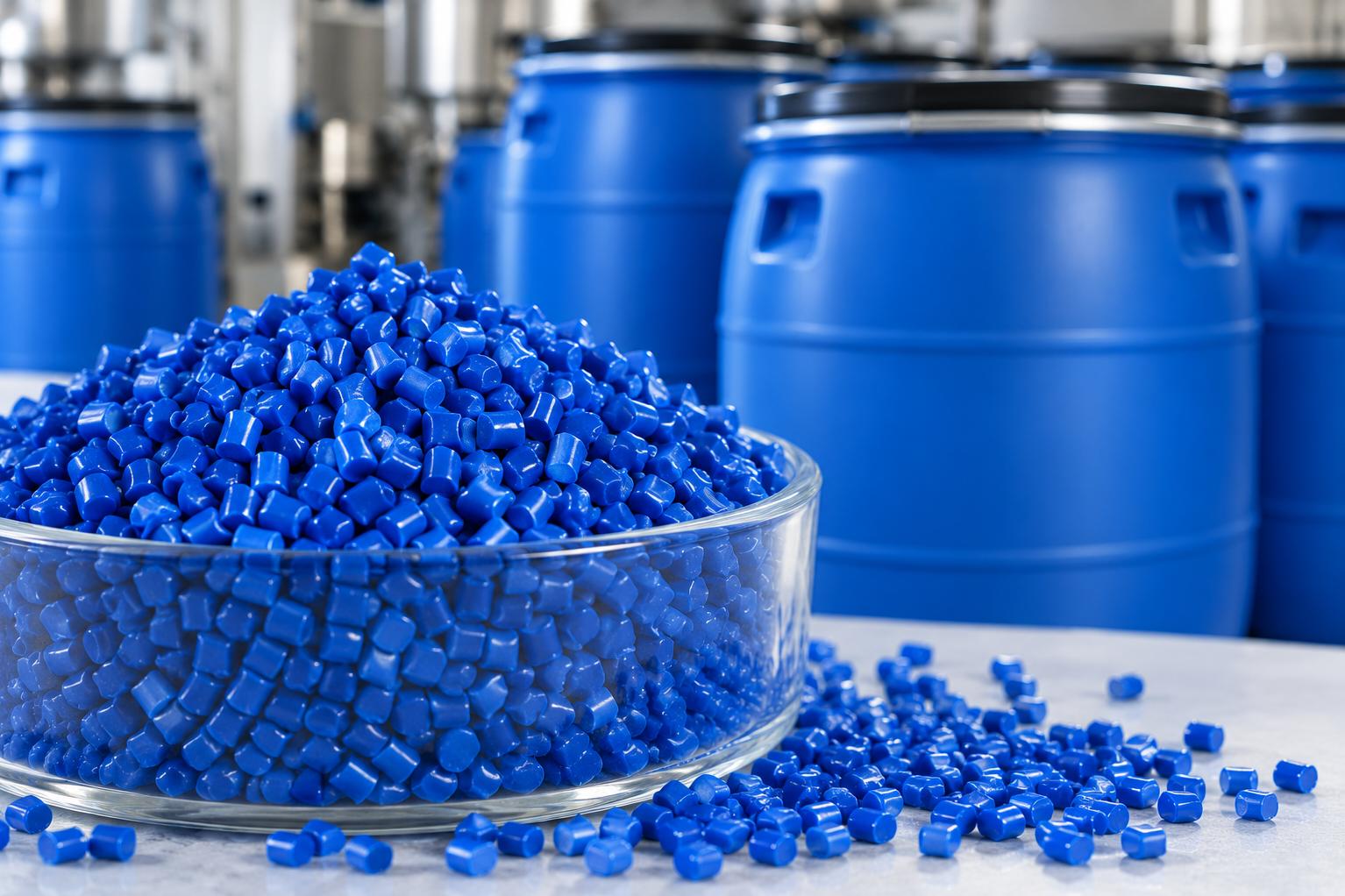
Blue plastic drums are widely used for industrial storage, handling, logistics, and packaging applications. For manufacturers producing them at commercial scale, maintaining a recognizable and repeatable colour can be an important part of product consistency. Selecting a supplier for Masterbatches for Blue drum production should therefore involve both technical and procurement considerations.
Industrial buyers in Jaipur, Rajasthan, can make a more informed supplier decision by evaluating application understanding rather than choosing solely on quoted price.
Check Whether the Supplier Understands the Polymer
The first useful discussion is about the material being processed.
A masterbatch supplier should request information about the polymer grade, manufacturing process, recycled-content use where relevant, processing conditions, and desired colour.
This helps distinguish an application-focused discussion from a simple colour catalogue transaction.
Ask How Colour Matching Is Approached
The phrase blue drum can describe many shades.
A manufacturer may need dark blue, royal blue, medium blue, or a customer-specific colour standard. Providing a physical approved sample or recognized colour reference can make the target clearer.
The supplier should also understand that the finished colour can be influenced by polymer colour, wall thickness, masterbatch dosage, and processing conditions.
Evaluate Dispersion and Moulding Behaviour
Large containers provide broad surfaces on which inconsistencies can become visible.
During trials, drum manufacturers should check:
- Overall colour uniformity
- Streaking
- Pigment specks
- Shade differences
- Surface appearance
- Processing stability
- Repeatability between moulding cycles
These observations provide practical information about whether Masterbatches for Blue drum are suitable for regular production.
Discuss Functional Requirements Separately
If the finished drum has requirements beyond colour, these should be communicated clearly.
For example, where outdoor storage is expected and UV-related performance is part of the specification, the relevant additive requirements should be discussed rather than assumed.
Similarly, the suitability of the finished drum for a particular packaged substance depends on the complete container design, polymer system, regulatory requirements, and application. A colour masterbatch alone does not establish such suitability.
Look Beyond the Initial Sample
Supplier selection should consider what happens after sample approval.
Procurement managers may want to understand expected supply consistency, technical communication, batch identification, order quantities, and the process used when a colour adjustment is required.
Khetan Polytex Private Limited manufactures masterbatch and polymer additive products for various plastics applications. For Jaipur-based drum manufacturers, providing actual processing details can help create a more focused technical discussion before commercial quantities are ordered.
Frequently Asked Questions
Is Shade Matching Enough to Approve a Supplier
No. Processing behaviour, dispersion, dosage, consistency, and application compatibility should also be evaluated.
Does Drum Wall Thickness Affect Colour
It can influence the visual appearance and opacity of the finished product, making full-scale trials useful.
What Should Procurement Teams Include in an Enquiry
Polymer type, process, target blue shade, reference sample, dosage expectations, production volume, recycled-content information, and any functional requirements are useful starting points.
A dependable supplier of Masterbatches for Blue drum manufacturing should be able to discuss the material in the context of the actual production process. This helps buyers evaluate the grade on measurable application requirements rather than making a decision based only on colour samples and price.
Keywords