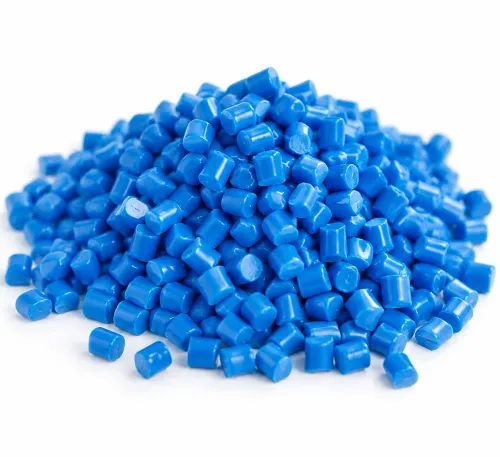
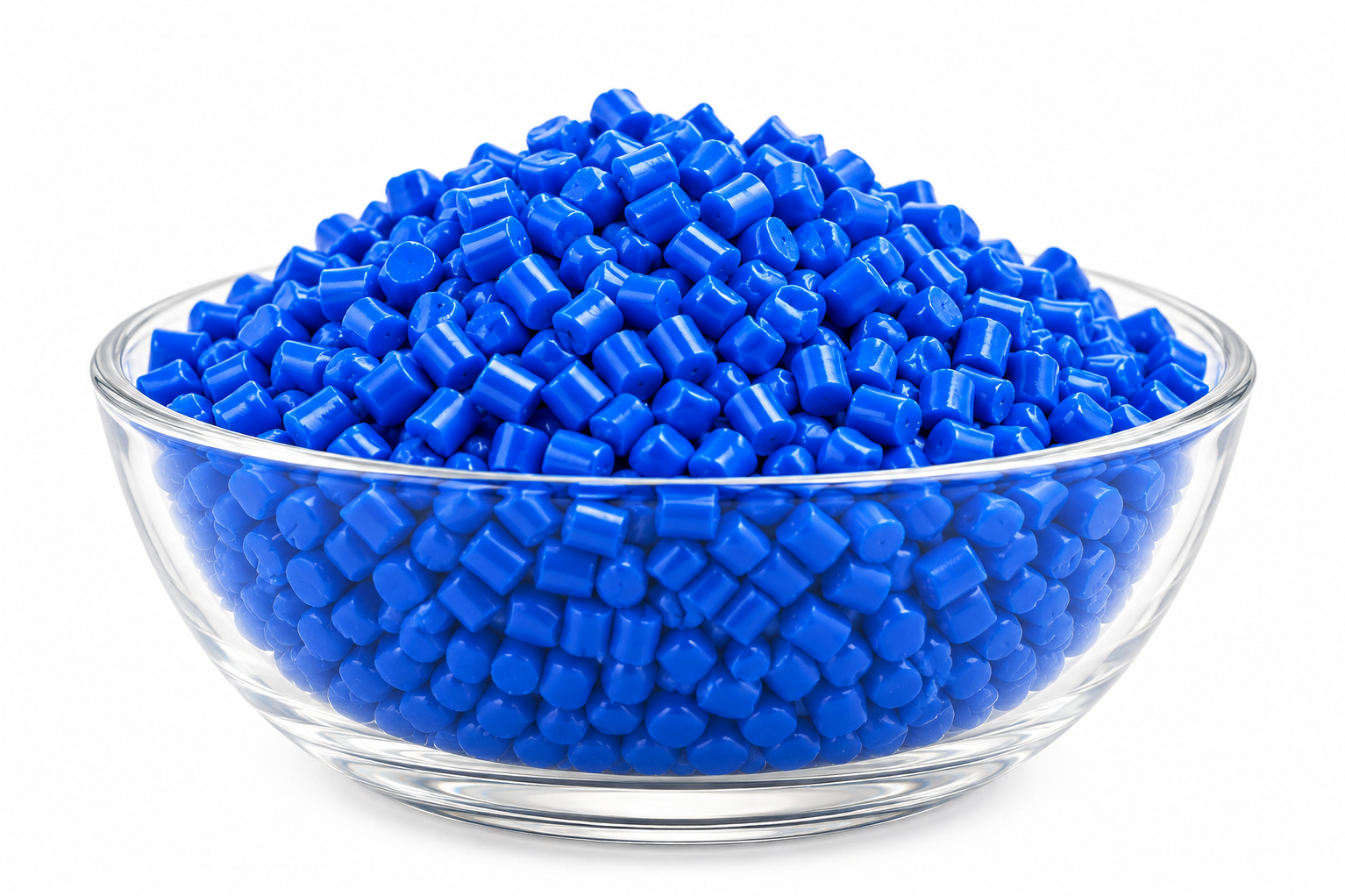
Road barriers are large moulded products that may be exposed to outdoor conditions, handling, transport, repeated use, and highly visible public environments. When manufacturers evaluate Masterbatches for Injection moulding road barrier applications, they need to consider the complete product specification rather than colour alone.
For injection moulders and industrial buyers in Jaipur and across Rajasthan, this means discussing polymer, processing conditions, colour requirements, outdoor exposure, and any required additive functionality before approving a material.
Start With the Base Polymer
The polymer used to manufacture the road barrier determines the compatibility requirements for the masterbatch.
A suitable carrier system can support more effective incorporation of pigments and additives during moulding. Buyers should therefore identify the exact resin or polymer family before requesting recommendations.
Where recycled material is incorporated, that information should also be disclosed because the underlying colour and material consistency can influence the finished appearance.
Outdoor Use Changes the Evaluation
Road barriers frequently remain outdoors for extended periods.
Sunlight, heat, weather exposure, dust, and repeated handling can affect plastic products over time. Depending on the product specification, manufacturers may need to discuss UV-related additive requirements alongside colour masterbatch selection.
Colour alone should not be assumed to provide weathering protection.
If outdoor durability is a defined requirement, it should form part of the technical discussion before production.
Large Mouldings Make Colour Variation Noticeable
A road barrier has a much larger visible surface than many small injection-moulded components.
This can make flow-related colour variation, streaking, poor dispersion, and inconsistent shade more noticeable.
Manufacturers evaluating Masterbatches for Injection moulding road barrier should therefore inspect multiple areas of the moulded component during trials.
Processing parameters also need to remain reasonably controlled so the masterbatch can be assessed under representative production conditions.
Consider the Complete Production Economics
Procurement decisions should not rely only on masterbatch price.
A useful evaluation includes dosage, colour strength, scrap generated during shade adjustment, processing stability, and consistency across production batches.
If one formulation requires repeated corrections to achieve the approved colour, the apparent purchase-price saving may not translate into lower production cost.
For high-volume moulders around Jaipur, repeatable performance can therefore have direct operational value.
Frequently Asked Questions
Can a Standard Colour Masterbatch Automatically Provide UV Protection
No. UV performance depends on the formulation and additive package. Outdoor requirements should be discussed specifically.
Should Recycled Polymer Be Included in Trials
Yes, when recycled polymer will be used in commercial production. Its underlying colour and variability can influence the finished shade.
What Details Help With Grade Selection
Polymer type, product weight, target colour, outdoor exposure, moulding temperature, recycled-content level, and required additives are all useful.
Khetan Polytex Private Limited works with manufacturers requiring masterbatch and polymer additive solutions for moulded applications. Providing complete technical details helps move the discussion beyond basic colour matching.
Selecting Masterbatches for Injection moulding road barrier production should ultimately be based on compatibility, dispersion, colour consistency, processing behaviour, outdoor requirements, and commercial practicality. Evaluating all of these areas during trials provides a stronger basis for regular production approval.
Keywords