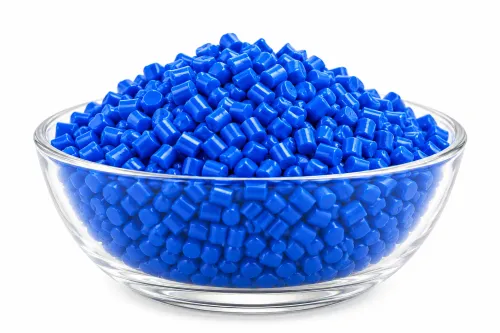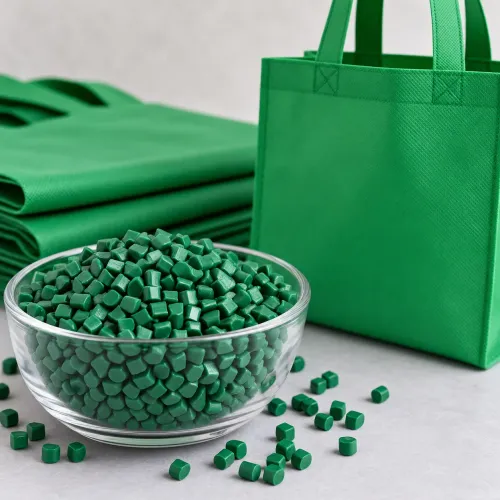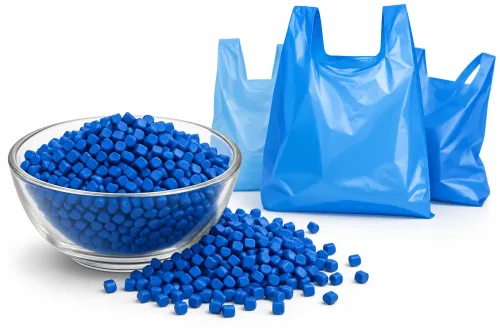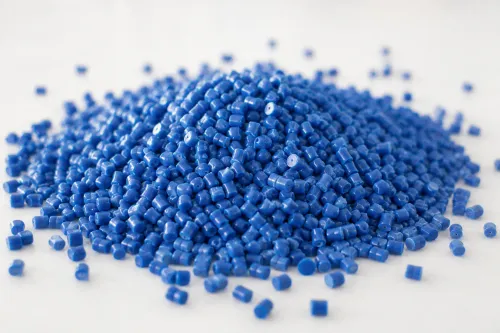

Play slides are highly visible moulded products where colour, surface appearance, material consistency, and outdoor-use requirements can all influence manufacturing decisions. Selecting Masterbatches for Play Slides without considering the actual product environment can lead to avoidable production adjustments later.
For plastics manufacturers in Jaipur and across Rajasthan, understanding the common selection mistakes can make supplier discussions and production trials more productive.
Choosing a Grade Based Only on Colour
A bright sample colour can attract attention, but shade is only one requirement.
Manufacturers also need to consider polymer compatibility, processing temperature, dispersion, dosage, and the conditions in which the finished slide will be used.
A colour match achieved in a laboratory sample does not automatically mean identical performance in a large moulded component.
Ignoring Outdoor Exposure
Many play slides are installed outdoors where the plastic is exposed to sunlight and changing weather conditions.
If UV-related performance is required, manufacturers should discuss the appropriate additive solution separately rather than assuming that coloured masterbatch alone addresses outdoor durability.
The finished product specification should determine what protection is required.
Testing With the Wrong Polymer
Colour appearance can vary between different base polymers and resin grades.
A masterbatch trial conducted in one material may therefore provide limited guidance if commercial production uses another.
For meaningful evaluation, Masterbatches for Play Slides should be tested in the intended production resin wherever practical.
Overlooking the Size of the Moulded Product
Large plastic surfaces can reveal inconsistencies that are difficult to notice in small samples.
Manufacturers should inspect the complete moulding for:
- Shade uniformity
- Streaks
- Pigment specks
- Flow-related appearance differences
- Surface consistency
- Colour variation between moulding cycles
This gives a more realistic indication of commercial performance.
Focusing Only on Masterbatch Price
Price per kilogram does not show the complete colouring cost.
A lower-priced material that requires significantly higher dosing may not provide the expected saving. Frequent shade adjustments and rejected mouldings can also affect production economics.
Buyers should compare effective dosage and production performance alongside purchase price.
Skipping a Controlled Trial
Moving directly into a large production batch can increase the consequences of a colour mismatch.
A controlled trial allows the manufacturer to check the grade using representative resin, machine settings, moulding conditions, and product geometry.
For processors operating in Jaipur's plastics manufacturing sector, documenting trial conditions can also make future repeat production easier to control.
Frequently Asked Questions
Are Bright Colours More Difficult to Produce
Performance depends on the exact shade, pigment system, polymer, dosage, and product requirements. Each colour should be evaluated individually.
Can Additives Be Discussed Alongside Colour Requirements
Yes. Where the application requires specific functionality, the additive requirements can be considered during formulation discussions.
What Should Be Sent to the Masterbatch Manufacturer
An approved sample, colour reference, polymer information, processing conditions, end-use details, and expected performance requirements can all be useful.
Khetan Polytex Private Limited supplies masterbatch and polymer additive solutions for multiple plastics applications. A detailed application discussion can help manufacturers identify suitable options for trial evaluation.
Avoiding these common mistakes when selecting Masterbatches for Play Slides helps manufacturers make decisions based on real production conditions rather than appearance alone. That can support more predictable colour development and a smoother transition from sample approval to routine manufacturing.
Keywords