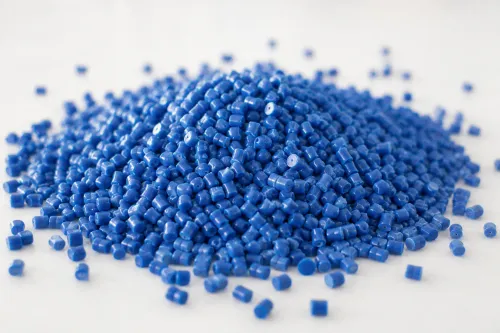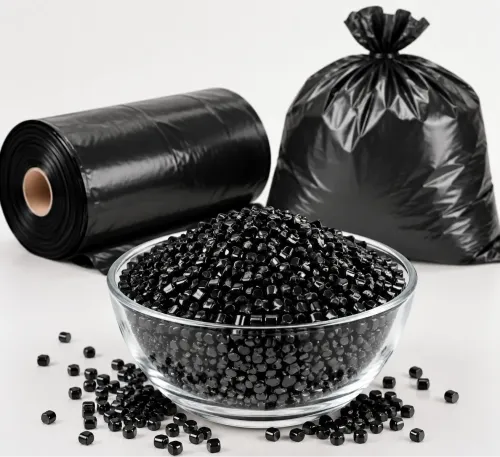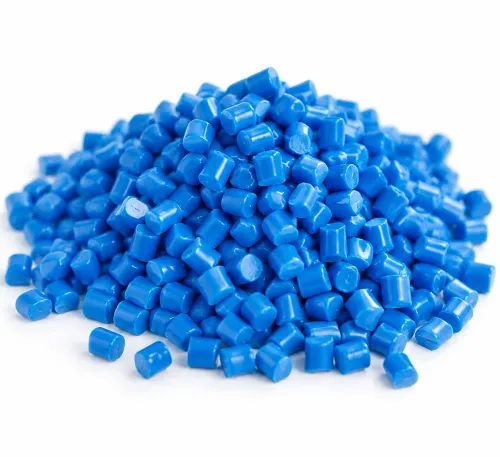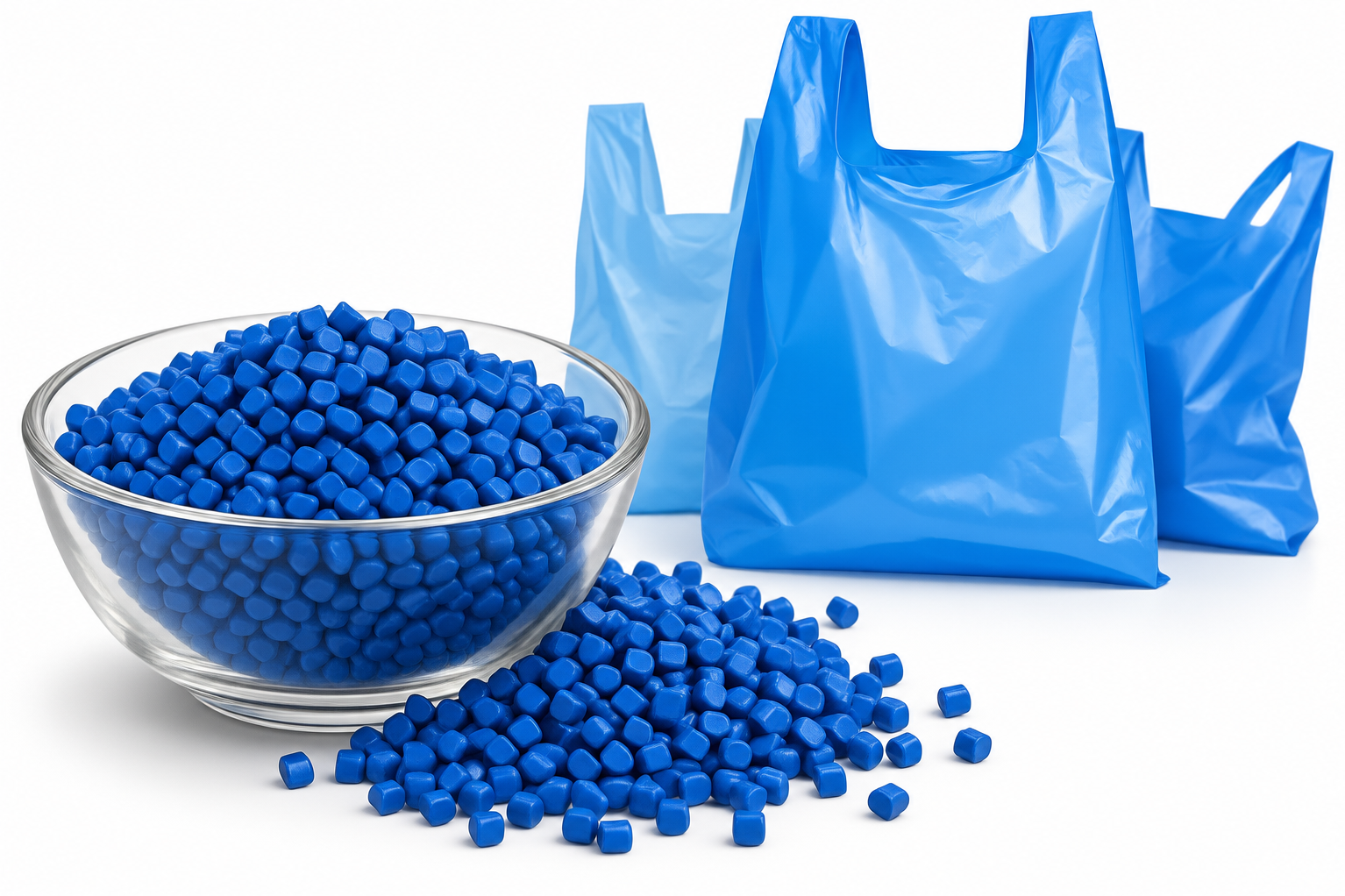
LLDPE bags are used across packaging, industrial, retail, agricultural, and general-purpose applications. Although the finished products may appear simple, producing consistent film requires careful control over resin, extrusion settings, additives, thickness, and colour formulation. Masterbatches for LLDPE bags therefore need to be selected with both appearance and processing performance in mind.
For film processors in Jaipur and other manufacturing centres across Rajasthan, understanding the relationship between masterbatch and film behaviour can make material evaluation more effective.
LLDPE Film Requires Uniform Pigment Distribution
Film applications can expose dispersion problems quickly.
Because the polymer is converted into relatively thin sections, pigment agglomerates or uneven distribution may appear as visible specks, streaks, patches, or shade variations.
Good dispersion helps the colour distribute consistently throughout the film and supports a more uniform appearance across the roll.
This becomes increasingly important when producing coloured packaging films where customers expect consistency from one batch to another.
Film Thickness Changes the Visual Result
The same formulation can appear different when the film thickness changes.
A colour that looks sufficiently deep in a thicker bag may appear lighter in a thinner product. Opacity can change as well.
Manufacturers evaluating Masterbatches for LLDPE bags should therefore conduct trials at the thickness they actually intend to manufacture rather than relying exclusively on plaques, pellets, or unrelated samples.
Processing Conditions Need Attention
Extrusion temperature, mixing efficiency, screw design, output rate, and other machine conditions can influence the way masterbatch disperses through LLDPE.
When investigating inconsistent colour, processors should avoid assuming immediately that the masterbatch is the only variable.
A practical review should include:
- Base resin consistency
- Masterbatch dosing accuracy
- Extrusion temperature
- Mixing conditions
- Film thickness variation
- Raw-material changes
- Recycled-material content where applicable
Looking at the complete process can make troubleshooting more accurate.
Choosing a Grade Based on End Use
LLDPE bags can differ substantially in purpose.
A simple industrial liner may have different appearance requirements from a retail packaging bag. Some products prioritize opacity, while others require a particular shade or visual finish.
For manufacturers supplying customers around Jaipur, the intended application should therefore be communicated before a masterbatch grade is finalized.
Khetan Polytex Private Limited works with plastic processors across different applications, making technical information about polymer type, end product, colour requirement, and processing conditions useful during grade selection.
Frequently Asked Questions
Can Masterbatch Affect Film Appearance Without Changing the Resin
Yes. Pigment dispersion, colour strength, dosage, and compatibility can influence the visual appearance of the finished film.
Why Does the Same Colour Look Different in Two LLDPE Bags
Differences in film thickness, base resin, recycled content, processing conditions, and masterbatch dosage can all influence appearance.
Is Trial Production Necessary
Trial production is a practical way to confirm colour, dispersion, processing behaviour, and finished-film appearance before adopting a grade for routine manufacturing.
For buyers evaluating Masterbatches for LLDPE bags, the key is to look beyond a colour swatch. Polymer compatibility, film thickness, dispersion, dosage, process stability, and end-use expectations collectively determine whether a masterbatch performs effectively in commercial production.