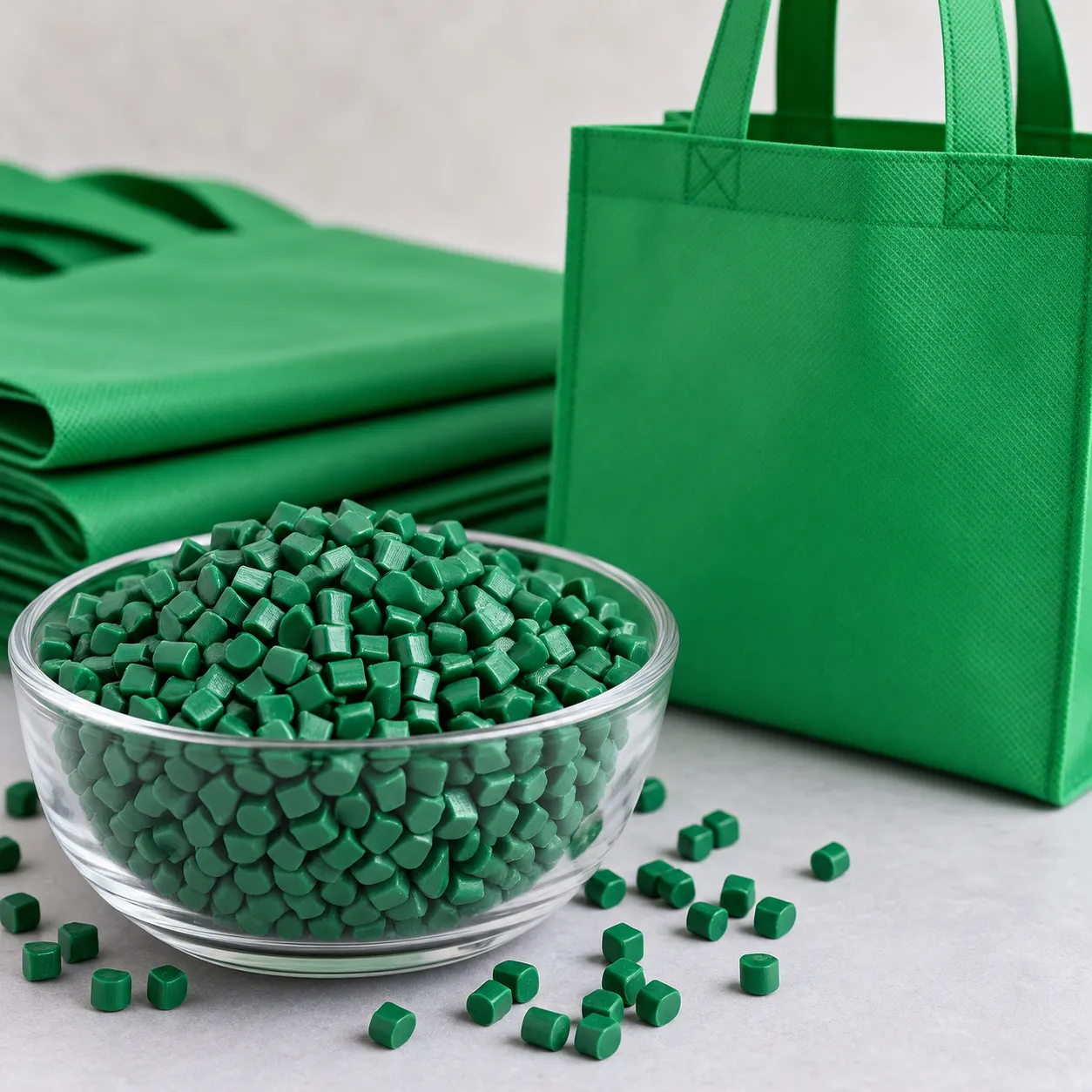
Non-woven shopping bags combine utility with visual presentation. Manufacturers may need bright colours, consistent shades, clean surfaces, printing compatibility, and dependable processing across large production volumes. Comparing Masterbatches for Non-woven shopping bags therefore requires more than selecting the closest colour from a shade card.
For non-woven manufacturers and procurement teams in Jaipur, Rajasthan, a structured comparison can help identify grades that fit both processing requirements and customer expectations.
Begin With the Actual Polymer Application
Many non-woven shopping bags are produced using polypropylene-based processes. The masterbatch needs to be compatible with the resin and manufacturing conditions being used.
Buyers should compare candidate grades using the same production polymer whenever possible.
Changing both resin and masterbatch during a trial makes it more difficult to understand which material caused a difference in appearance or processing behaviour.
Compare Colour at Realistic Dosage Levels
A masterbatch with a lower purchase price is not necessarily more economical in production.
If a higher dosage is required to reach the desired shade, the effective colouring cost may change considerably.
When comparing products, manufacturers should look at:
- Recommended addition rate
- Colour strength
- Shade accuracy
- Dispersion
- Coverage
- Process stability
- Batch consistency
- Effective cost per kilogram of finished material
This provides a more useful commercial comparison than masterbatch price alone.
Evaluate Surface Uniformity
Non-woven shopping bags often have large visible surfaces, making colour variation easy to notice.
Uneven pigment distribution can affect the appearance of the material before printing and may become particularly visible in solid-colour bags.
A production trial should therefore assess the material across a representative length rather than judging only a small initial sample.
Consider Printing From the Beginning
Many shopping bags carry logos, retail branding, promotional graphics, or product information.
The base colour should complement the intended printed design. A shade that appears attractive independently may not provide the expected contrast once printing is added.
Manufacturers serving branded packaging customers around Jaipur can reduce later adjustments by considering printing requirements during masterbatch selection.
Compare Repeatability Across Batches
A first trial can be successful, but regular production requires repeatability.
Procurement managers should consider whether the supplier can maintain appropriate consistency across subsequent batches and whether technical discussions can be based on defined samples or agreed colour requirements.
Khetan Polytex Private Limited manufactures masterbatch solutions for different plastic-processing applications. When discussing Masterbatches for Non-woven shopping bags, buyers can provide polymer, colour, process, and end-product details to support a more application-focused evaluation.
Frequently Asked Questions
Should Buyers Choose Solely on Price Per Kilogram
No. Dosage, colour strength, consistency, dispersion, and processing performance can influence the effective cost of using the product.
Does Fabric GSM Affect Colour Appearance
Material construction and thickness can influence the perceived colour and coverage, so trials should represent actual production specifications.
What Should Be Included in a Supplier Enquiry
Useful details include polymer type, required shade, application, production process, expected dosage where known, printing needs, and any approved colour reference.
A strong comparison of Masterbatches for Non-woven shopping bags should therefore combine technical and commercial factors. The most useful grade is one that fits the polymer system, achieves the intended appearance at a practical dosage, and performs consistently under normal production conditions.
Keywords