A masterbatch that produces the right colour can still introduce an unapproved additive, alter melt flow or fail a drinking-water extraction test. By the end, you will have a practical way to screen supplier documents, specify formulation and dosage, test dispersion and qualify the finished pipe for its intended market.
Key takeaways
- Confirm approval for the finished pipe, not only the masterbatch.
- Obtain ingredient, formulation and certificate-scope documents from the supplier.
- Set numeric limits for dosage, melt flow, dispersion and pipe defects.
- Run a supplier-batch trial on representative extrusion equipment.
Start with the finished pipe’s potable-water approval route
A masterbatch is suitable for potable HDPE pipe only when the finished pipe, in its actual formulation and use, passes the drinking-water approval route required by the buyer or jurisdiction. A generic “food-contact compliant” statement proves little: it does not cover extraction, taste, odour, dosage, pipe temperature or the contact area.
Request these documents before treating a potable water masterbatch as qualified:
- An India-specific compliance statement identifying the intended application under IS 4984:2016, including the pipe compound, masterbatch dosage and colour.
- Migration or extraction-test reports naming the tested formulation, test conditions, temperature and laboratory.
- A confidential formulation declaration covering pigment or carbon black, carrier resin, additives and processing aids; “non-toxic pigment” is not a checkable identity.
- The applicable export evidence, such as NSF/ANSI/CAN 61 certification, BS 6920 test evidence or accepted EU food-contact documentation.
| Route | Evidence to request | What it does not prove |
|---|---|---|
| India | IS 4984:2016 application statement and supporting test reports | Automatic approval in another jurisdiction |
| North America | NSF/ANSI/CAN 61 listing or certificate for the formulation and use | Approval at every dosage, temperature or pipe size |
| UK or specified export market | BS 6920 evidence, or the named local equivalent | That a stripe compound covers a fully coloured pipe |
Confirm whether the colour contacts water directly. A blue stripe, coextruded layer and fully coloured wall have different contact areas, so approval for one construction cannot be transferred to another.
Check every ingredient and the formulation behind the certificate
A certificate can become misleading when the masterbatch changes the approved pipe formulation. Request a formulation declaration that names each pigment, carbon black, carrier resin, additive and processing aid, with grade, supplier, concentration and recommended let-down rate. Check that declaration against the potable-water approval for the finished pipe, not against a generic food-contact statement.
Use this approval checklist:
- Verify pigment approval for drinking-water contact in the target market. Record the exact pigment grade and migration evidence; colour strength alone proves nothing.
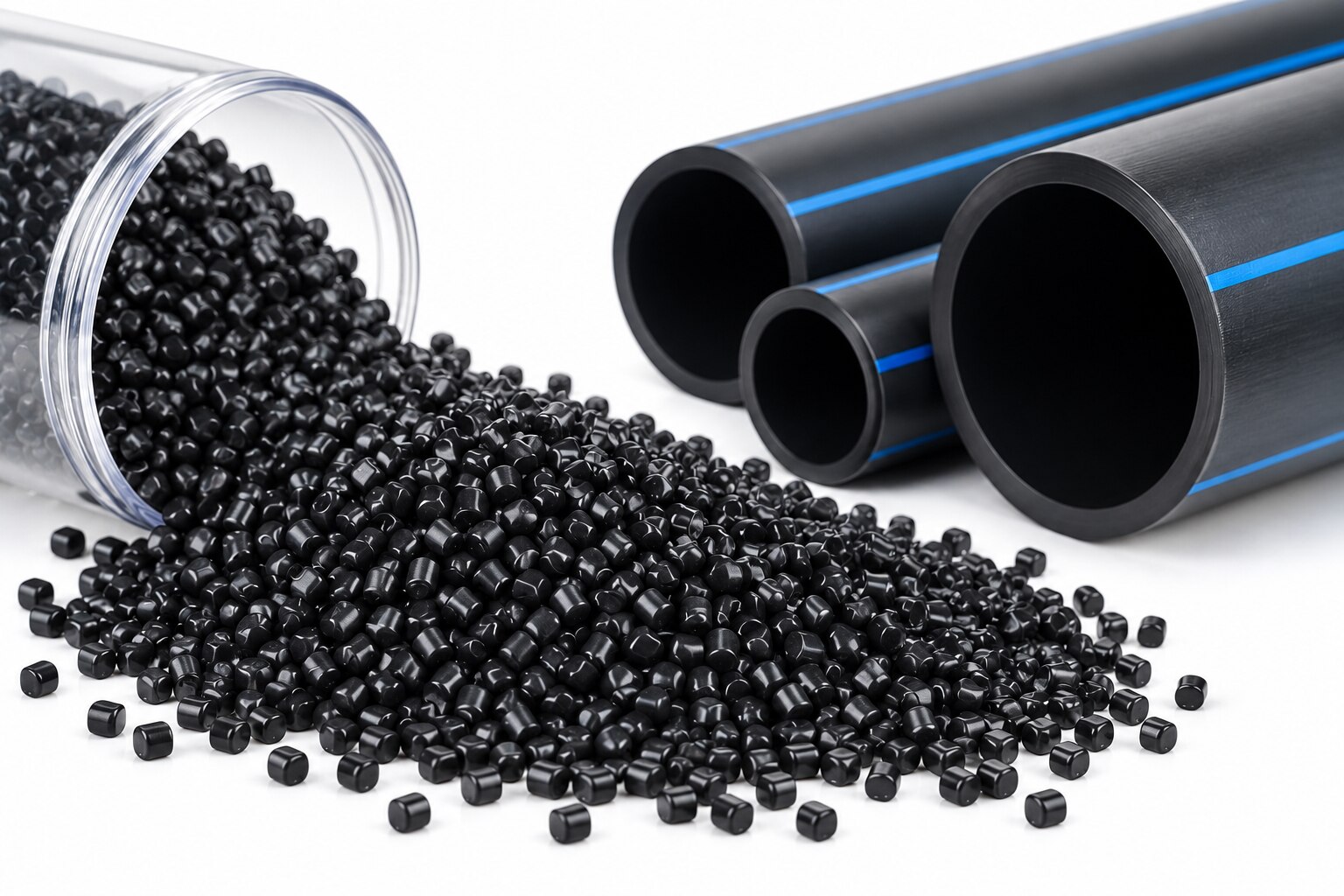
- For black pipe, confirm the carbon black grade, particle-size distribution, loading and dispersion method. A common specification is about 2.25% carbon black in the compound with approximately ±0.25% tolerance, but apply the contract’s limit and test method. ISO 6964 measures carbon-black content and dispersion; ISO 18553 assesses pigment or carbon-black dispersion.
- Confirm carrier resin compatibility with the pipe-grade HDPE and its qualification basis. A different polymer family, low-molecular-weight fraction or incompatible additive can create gels, weak interfaces, poor fusion and reduced hydrostatic life.
- Identify every additive and processing aid, including dispersants, waxes, antioxidants and lubricants, then verify its drinking-water status and maximum use level.
- Check moisture and contamination controls. Require sealed packaging, a cleanliness specification and drying conditions; wet pellets, dust or cross-contamination can produce bubbles, splay, gels and specks.
Approve the masterbatch only at the declared dosage and within the formulation covered by the relevant potable-water evidence.
Match dosage, melt flow and stability to your pipe process
A masterbatch can make a stable HDPE recipe unstable at the die: a high-MFR carrier or excessive addition lowers melt viscosity, shifting wall thickness, die swell, pressure and melt-fracture behaviour. Colour strength does not predict these effects.
1. Set the intended masterbatch let-down rate before approving colour strength. Calculate the final carbon-black, pigment and additive concentrations; for black pressure pipe, compare the result with the specified target, commonly about 2.25% carbon black with ±0.25% tolerance. Confirm the contract and test method.
2. Request MFR MVR data for the masterbatch, neat pipe resin and resulting blend under stated test conditions. Compare the blend at the proposed dosage, then run it on the intended extruder or a representative rheology setup. Screw design, screen packs, residence time and melt temperature can change pressure, mixing and die behaviour.
3. Compare oxidative induction time before and after addition. OIT screens the stabilizer system; it does not prove service life. A carrier can dilute, consume or interfere with the resin’s antioxidant package.
4. Recheck hydrostatic strength, slow-crack-growth resistance, density and dispersion on the final formulation. An incompatible carrier or low-molecular-weight fraction can produce gels, weak interfaces or poor fusion despite uniform-looking colour.
5. Examine production output for pressure fluctuation, screen plugging, gels, surface defects and wall-thickness variation. Do not approve a laboratory plaque as evidence that the pipe compound will remain stable in production.
Release the formulation only when its dosage and carrier match the qualification basis and the finished pipe passes the applicable specification.
Set measurable limits for carbon-black dispersion and pipe defects
A dark pipe does not prove uniform carbon-black dispersion. Set acceptance limits for carbon-black content, dispersion and agglomerate size at the masterbatch’s intended let-down rate, then verify them in the finished compound.
| Check | Method | Release evidence |
|---|---|---|
| Carbon-black content | ISO 6964 on pipe or compound sections | Result meets the contractual target; black PE specifications commonly use about 2.25% carbon black with a tolerance near ±0.25%, but confirm the applicable pipe standard |
| Carbon-black dispersion | ISO 6964 and ISO 18553 microscopy | No concentration bands, streaks or large agglomerates; compare the rating with an approved reference sample |
| Agglomerate size | Microscopic image analysis under the agreed method | A written maximum size and count per examined area, not simply “passes visually” |
| Extrusion behaviour | Trial on the production screw, screen pack and melt-temperature range | Stable head pressure and no abnormal pressure rise, screen plugging or unmixed material |
Use ISO 18553 to assess pigment or carbon-black dispersion in the compound, because a masterbatch pellet can look uniform while its carrier and pigment separate during dilution. Record the section thickness, magnification, number of fields and rating so two laboratories cannot interpret “good dispersion” differently.
Reject or investigate a batch that produces:
- Black specks, colour streaks, gels, bubbles or splay in the pipe
- A rising screen-pack pressure or unstable die pressure
- Dispersion outside the agreed ISO rating or agglomerate-size limit
- Carbon-black content outside the specified range
Confirm the blend again after extrusion for density and melt-flow rate; a visually acceptable pipe can still have a formulation that no longer matches its qualified performance.
Qualify the supplier batch on representative extrusion equipment
Run the final approval trial on the production extruder, at the intended let-down rate, using the actual HDPE resin, screw, screen pack, die, melt-temperature profile and line speed. A plaque made in a laboratory mixer cannot reveal screen plugging, gels, pressure fluctuation or poor wall-thickness control.
1. Record baseline pressure, motor load, output, melt temperature, die condition and pipe dimensions before adding the candidate batch.
2. Extrude enough pipe to cover start-up, steady running and a controlled stop. Inspect the pipe for bubbles, splay, streaks, gels, coloured or black specks, surface roughness and dimensional drift.
3. Test samples for dispersion, carbon-black loading where applicable, MFR or MVR of the blend, and OIT before and after masterbatch addition. Apply the same migration testing and odour and taste testing route required for the finished potable pipe.
4. Compare results with written batch acceptance criteria, including moisture or packaging damage, pellet cleanliness, colour tolerance, pressure stability, defect limits and the applicable pipe specification. Reject the batch when any limit fails; do not release it because the colour looks correct.
Before release, ask the potable pipe masterbatch supplier for the batch number, certificate of analysis, retained-sample identification, moisture result, MFR or MVR data, recommended drying conditions, cleanliness specification, formulation or ingredient identity under confidentiality, and current compliance and organoleptic test records.
Khetan Polytex Private Limited should be assessed against the same evidence when its black, grey or marking masterbatch is trialled. Require written approval for any change in pigment, carrier, additive, manufacturing site or process.
Related products
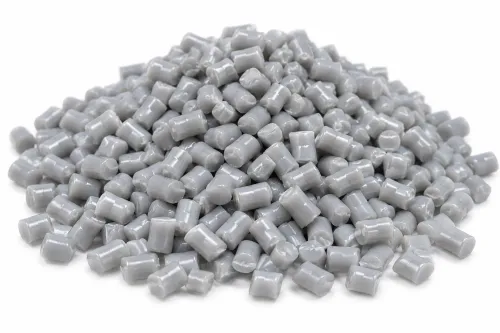
 | GREY MASTERBTACH ₹160 GREY 12006 IS A LIGHT GREY MASTERBATCH. IT IS CLEAR,SHINE GREY TONING MASTER BATCH WITH EXCELLENT DISPERSION AND ESILY COMPATIBLE WITH PE PE RESIN.IT... View product → |
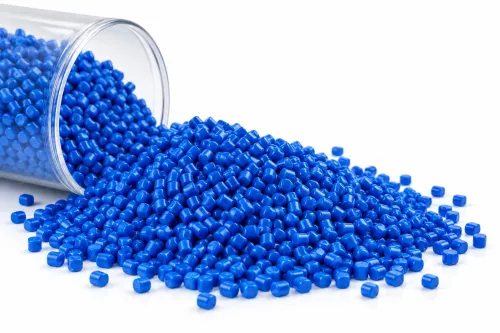
 | blue masterbatch ₹155 generally used for blue marking in hdpe pipe coils with high color strength and thermal stability. View product → |
Frequently asked questions
Why must approval cover the finished potable HDPE pipe?
Approval must match the finished pipe’s formulation, dosage, extraction conditions, taste, odour, pipe temperature and contact area. A generic food-contact statement does not establish those conditions.
What ingredient and formulation documents should manufacturers request?
Request the ingredient identity, formulation scope, certificate or approval documents, permitted dosage and evidence that the certification covers the intended potable-water application.
How should manufacturers match masterbatch to the pipe process?
Compare the recommended dosage, carrier-resin melt flow and thermal stability with the HDPE grade, screw design, extrusion temperature, output rate and residence time used on your line.
What should a qualification trial measure?
Run the batch on representative extrusion equipment and record dosage, melt flow behaviour, carbon-black dispersion, colour consistency, surface defects, dimensions and process stability.