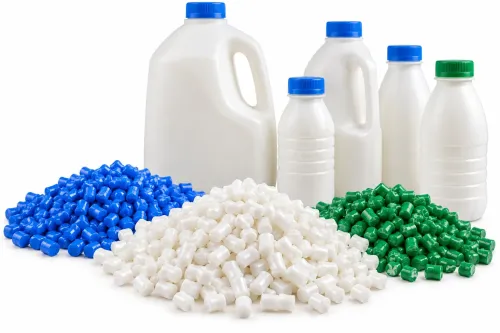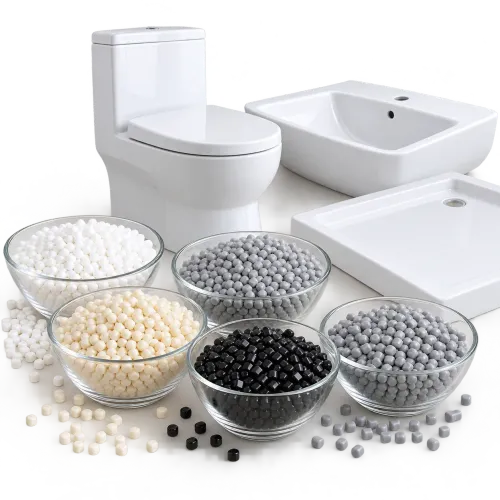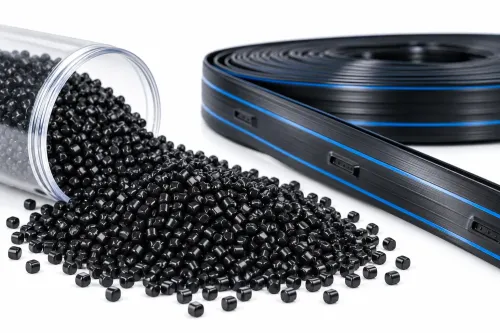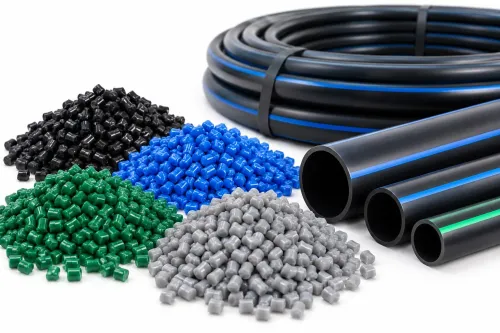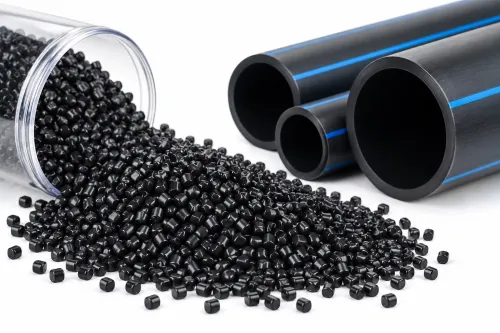
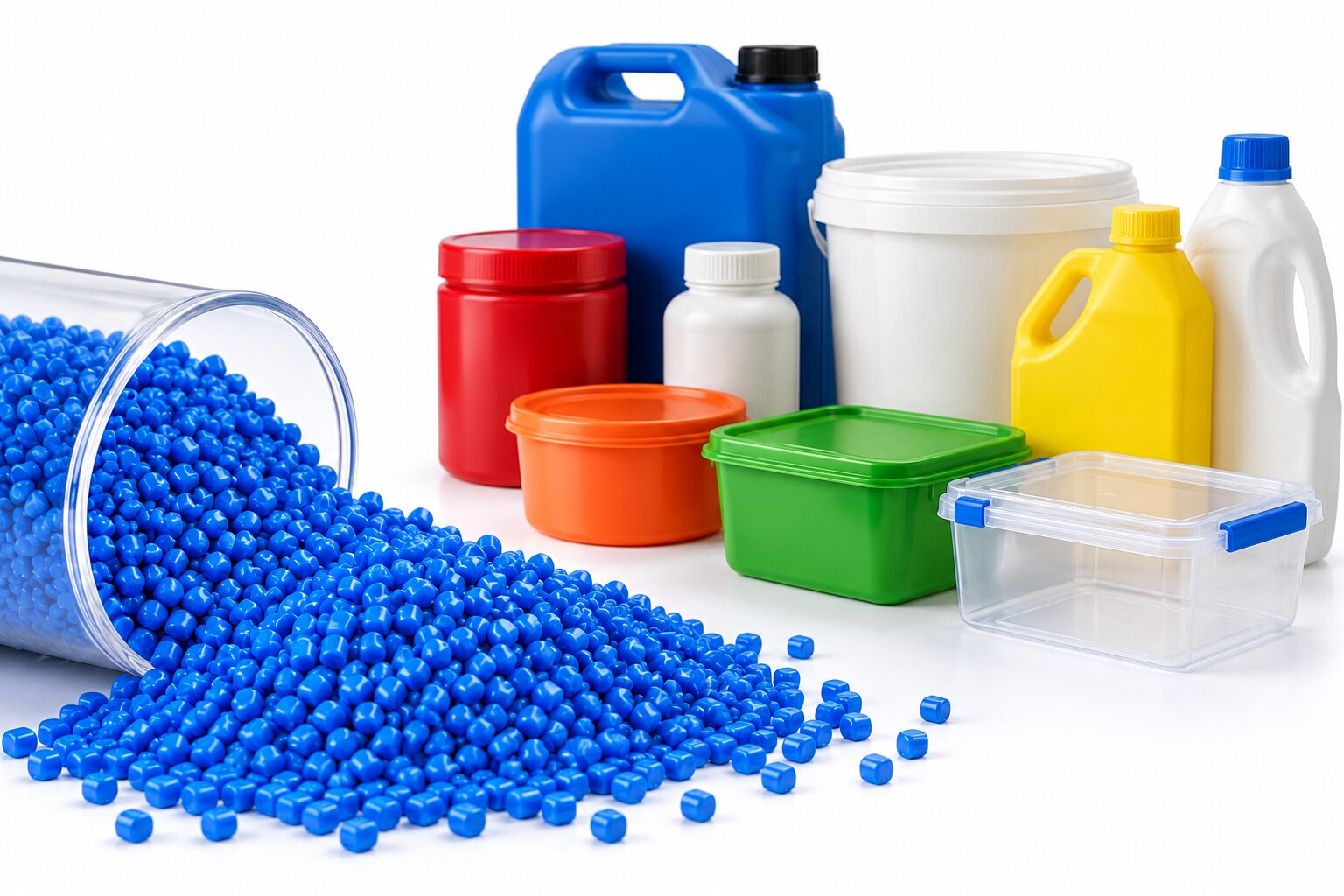
A masterbatch that performs well in an injection-moulded cap can fail in a PET bottle, blow-moulded jerry can or thermoformed tray because each process creates different heat, shear, orientation and optical conditions. By matching the carrier, dosage, colour target and performance tests to the actual container line, you can reduce streaks, haze, weak parts, shade variation and production stoppages.
Key takeaways
- Match the carrier resin to the container’s base polymer and moulding process.
- Calculate let-down ratio using colour strength, wall thickness and opacity requirements.
- Verify food-contact documents, additive compatibility and recycled-resin performance.
- Run production trials on the actual container line before final approval.
Match the Masterbatch to the Moulding Process and Base Polymer
A masterbatch qualified for injection moulding is not automatically suitable for a bottle line. Match its carrier resin, pigment dispersion, thermal stability and moisture specification to the base polymer and the melt history of the process; an incompatible carrier can cause streaks, deposits, poor impact strength or weak weld lines.
| Process | Characteristics to check | Suitable focus |
|---|---|---|
| Injection moulding | Fast dispersion, short-cycle thermal stability, low mould deposit and carrier compatibility | PP, HDPE, PS or ABS caps, closures and rigid containers |
| Blow moulding | Stable colour through longer residence time, adequate melt strength, opacity and resistance to orientation stress | HDPE or LDPE bottles and jerry cans; extrusion blow moulding needs consistent parison colour |
| PET processing | PET-compatible carrier, very low moisture, low haze and stability through reheating and stretching | Preforms and stretch blow moulding bottles; evaluate the finished bottle, not only an injection plaque |
| Sheet or tray production | Uniform dispersion across a wide sheet, surface gloss, low gels and suitability for extrusion or thermoforming temperatures | PP, PS, PET or multilayer sheet and trays |
For PET, dry the actual resin and masterbatch combination, because moisture can reduce intrinsic viscosity, embrittle containers and increase degradation products such as acetaldehyde. Test the intended preform geometry, reheating profile, stretch ratio and bottle-blowing conditions. These moulding applications can reveal streaks, pearlescence or uneven wall colour that a flat specimen hides.
With recycled resin, qualify representative lots: residual colour, melt-flow rate and oxidation history change both shade and process tolerance. Set the colour target using CIELAB values and an agreed colour-difference limit, then confirm dosage on the production equipment.
Set the Let-Down Ratio from the Container’s Colour and Wall Thickness
A 2% let-down ratio in a thick jar is not a prescription for a 2% let-down ratio in a thin bottle. The same colour has a shorter optical path through a thin wall, so it may need greater colour strength or opacity to match the appearance.
Start with the container’s natural resin colour, minimum wall thickness and required visual target, not a percentage copied from another format.
- Define the target using a reference part and instrumental readings: CIELAB values, colour difference and, for translucent packaging, transmission or haze. Specify the acceptable tolerance before setting dosage.
- Run a small plaque or part trial at several dosage levels around the supplier’s recommendation. Compare each against the target container, because plaque thickness and container wall thickness do not produce the same optical result.
- Calculate the let-down against the total polymer-and-additive blend. Adding 2 kg of masterbatch to 98 kg of resin is a 2.0% let-down; adding 2 kg to 100 kg of resin is 1.96%.
- Confirm the selected dosage on the production moulding line, then check colour uniformity at thin sections, corners and heavier areas.
Do not increase pigment simply to hide variation from filler or recycled resin. Mineral filler can alter opacity, shrinkage and impact performance, while recycled feedstock can change the starting shade; qualify representative lots against both colour tolerance and container performance.
Choose Colour and Stability for Clear, Opaque and Exposed Packaging
A correct colour match does not guarantee a saleable pack. For clear containers, select a colourant that preserves low haze and high transparency while avoiding fluorescence, gels, unmelted particles and streaks that become visible through the wall.
| Application | What to control | Selection consequence |
|---|---|---|
| Clear containers | Haze, total transmittance, clarity and gloss | Use a highly dispersed system tested in the actual resin; an opaque-pack pigment can make the package visibly cloudy. |
| Translucent containers | Light scattering and even wall colour | Choose controlled opacity that gives consistent appearance without blotches or excessive haze. |
| Opaque containers | Tint strength, hiding power and surface gloss | Prioritise coverage of resin variation, regrind and mould-flow marks; transparency matters less. |
| Exposed packaging | UV exposure, colour shift and surface degradation | Use a light-stable pigment and UV package matched to outdoor exposure, shelf life and pack colour. |
Heat history changes the decision. A masterbatch that survives short injection residence time can fail during extrusion blow moulding, PET preform injection, reheating and stretch-blow orientation, producing pearlescence, streaks or uneven colour. Test the intended preform geometry, reheating profile and bottle-blowing conditions.
Match the stability package to the end use: hot-fill or retort containers need resistance to prolonged heat, while oil, detergent and solvent packaging needs colour and gloss retention after contact. Check whether slip, antistat or antiblock additives alter sealing, printability, cap torque or haze before approving the visual match.
Check Food Contact, Additives, Fillers and Recycled Resin Before Approval
Approve the formulation only after every component and use condition is covered. For food-contact packaging, “food safe” pigment is not enough: check the carrier, dispersant, stabiliser, additive package, concentration, polymer, temperature and contact time. Assess migration against the intended food and service conditions.
| Material or use | Checks before approval | What can go wrong |
|---|---|---|
| Food-contact colour | Identify the US authorisation for each component; 21 CFR 177.1520 covers olefin polymers, not every pigment or additive. For the EU, check Regulation (EU) No 10/2011, including specific and overall migration limits where applicable. | A compliant carrier cannot make an unauthorised pigment or excessive additive compliant. |
| Slip, antiblock, nucleating or antistat package | Confirm the effective concentration and test sealing, friction, printability, haze, crystallisation, shrinkage and surface performance. | Cap torque, seal strength, transparency or antistatic performance can shift. |
| Filler masterbatch | Check mineral identity, loading, density, moisture and dispersion. Test drop impact, top-load, burst strength, elongation, shrinkage and warpage. | Higher stiffness or opacity can bring lower impact strength, greater weight and dimensional errors. |
| Regrind or recycled resin | Document the source, polymer, contamination controls, odour, colour variation and food-contact status of post-consumer material. | Unknown history can increase migration, odour and batch-to-batch variation. |
Calculate let-down against the total blend: 2 kg of masterbatch plus 98 kg of resin is 2.0%; plus 100 kg is 1.96%. Record the calculation when a regulatory limit or additive’s effective range is narrow. Test closures in the finished assembly because surface friction and shrinkage can change removal force and sealing.
Qualify the Masterbatch on the Actual Container Line
Approve the masterbatch only after it runs on the container line at normal speed and reaches the intended production rate. A plaque or injection sample can hide poor dispersion, gels, blocked screens, pressure instability, haze or colour streaks that appear during extrusion blow moulding or PET stretch-blow moulding.
Record the trial against the actual process, including:
- Base resin and recycled-content percentage, masterbatch let-down ratio, drying conditions, machine, screw design, melt temperature and residence time.
- The intended screen pack or melt filter, filter pressure, pressure change during the run, purge procedure and any black specks, deposits or unmelted particles.
- Instrumental CIELAB values and colour difference against the approved standard at start-up, steady state and after the line restarts. Set the permitted ΔE value before the trial.
- Container performance: wall-thickness appearance, opacity or transmission, haze, gloss, impact or top-load strength, seal integrity and odour. Test filled packs after hot-fill, retort, light exposure or chemical contact when those conditions apply.
- Samples from multiple time points and, for PET or other moisture-sensitive resins, moisture and intrinsic-viscosity results where degradation could reduce strength.
Request the technical data sheet, safety data sheet, carrier and polymer-compatibility statement, processing-temperature and drying guidance, filtration or dispersion data, food-contact and migration declaration, and a batch-specific certificate of analysis.
Khetan Polytex Private Limited can be asked to identify whether a colour grade’s carrier and heat history suit the exact container resin and line, rather than treating a catalogue grade as universal. Approve the batch only when trial records and documents agree.
Related products
 | masterbatches High-Quality Black Masterbatch Manufacturers and Supplies in India. Khetan Polytex is one of the leading black masterbatch manufacturers in India. View product → |
 | BLUE MASTERBATCH ₹300 Enhance your Plastic Products with Superior Blue Masterbatch! Blue Masterbatch is a high-quality colouring solution designed to provide plastic with... View product → |
Frequently asked questions
How do you match masterbatch to a container moulding process?
Check the masterbatch carrier resin, pigment dispersion, thermal stability and moisture specification against the base polymer and process, such as injection moulding, extrusion blow moulding or injection stretch blow moulding.
How do you set the masterbatch let-down ratio for containers?
Set the ratio after considering colour strength, container wall thickness, required opacity and the base resin’s natural colour, then confirm the result through moulding trials.
What should you check before using masterbatch in food packaging?
Request food-contact compliance documents for the intended market, and review pigments, additives, fillers, carrier resin and recycled content for compatibility with the packaging application.
Why must you qualify masterbatch on the actual container line?
Production trials reveal issues that laboratory plaques can miss, including streaks, deposits, colour variation, weld-line weakness, impact loss and process instability.
Related products
 | Desiccant Masterbatch ₹55 Desiccant Masterbatches can counter problems that develop during the processing of plastics due to the presence of moisture and prevents the... View product → |
 | BLUE MASTERBATCH E 1098 ₹198 BLUE COLOUR MASTERBATCH CODE OF PRODUCT: E 1098 HEAT STABILITY: 260° CELCIUS LIGHT FASTNESS: 7 ULTRA BLUE SHADE OF BLUE MASTERBATCH WITH VERY GOOD... |
 | Khetan Polytex are leading colour master batches manufacturers in India, Jaipur. Colour Masterbatches are used for coloring plastics and their dyes. View product → |
 | FILLER MASTERBATCH Most Reliable Filler Masterbatch Manufacturers in Jaipur, India We have been continuously innovating their product lines to keep up with the demands... View product → |