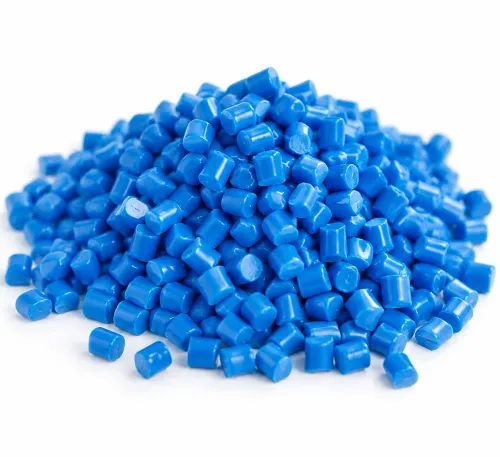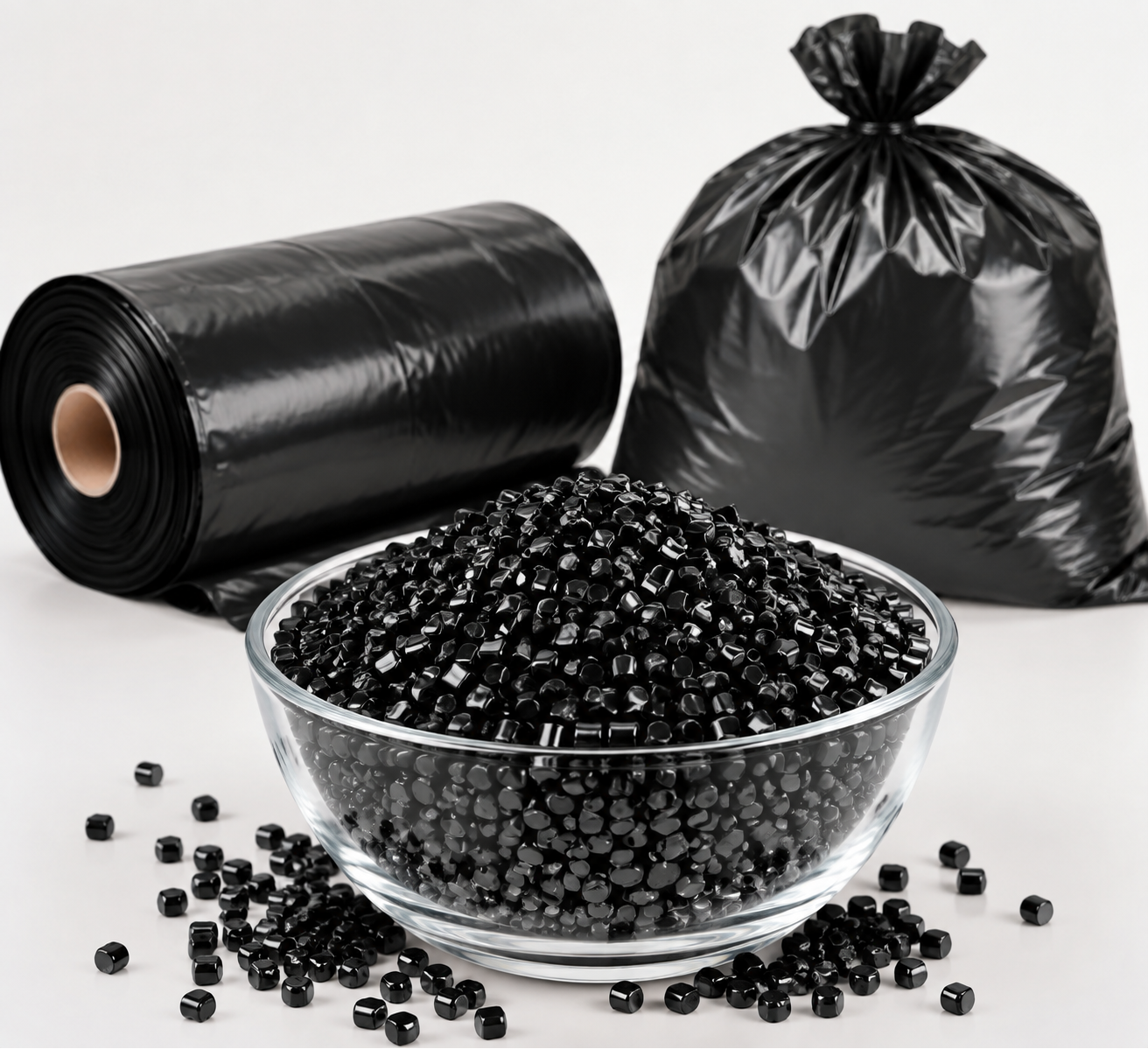
Garbage bag manufacturing is often a high-volume operation where processors need to balance colour, opacity, material cost, film quality, and stable production. Choosing suitable Masterbatches for Garbage bags is therefore an important part of maintaining consistent output across long manufacturing runs.
Manufacturers in Jaipur and across Rajasthan may produce garbage bags in different colours, thicknesses, sizes, and polymer combinations. The masterbatch needs to suit these changing production requirements without creating unnecessary processing complications.
Garbage Bag Applications Have Specific Material Requirements
Garbage bags are functional products, but their appearance still matters.
Black is widely associated with waste bags, while other colours may be used for segregation, institutional applications, commercial waste handling, or customer-specific requirements.
The required masterbatch performance can depend on:
- Film thickness
- Polymer composition
- Use of recycled material
- Required opacity
- Target colour
- Processing temperature
- Extrusion conditions
- Customer specifications
A formulation that works effectively in one garbage bag composition may need adjustment when the polymer blend or recycled-content percentage changes.
Opacity Can Be as Important as Shade
Buyers sometimes focus heavily on whether a black, blue, green, or other colour matches the required shade.
For garbage bags, hiding power may be equally important.
If insufficient opacity is achieved, processors may increase masterbatch loading to compensate. That can influence formulation economics and potentially alter processing behaviour.
The objective should be to find an appropriate balance between colour strength, coverage, dosage, and compatibility with the base material.
Recycled Polymer Can Change the Final Appearance
Many waste-bag applications use recycled or mixed polymer streams. These materials may have their own underlying colour variation.
This means the same masterbatch dosage may not produce an identical finished shade across every raw-material batch.
Processors using recycled content should communicate this clearly when discussing Masterbatches for Garbage bags with a manufacturer. Trial evaluation using the actual production material can provide more useful information than testing only with virgin resin.
Stable Dispersion Supports Efficient Production
Poorly dispersed pigment can result in specks, streaking, inconsistent film appearance, and quality complaints.
In high-output film manufacturing, even relatively small inconsistencies can become significant when thousands of bags are being produced.
Manufacturers should monitor dispersion during trials and check whether the masterbatch distributes uniformly under normal extrusion conditions.
For industrial buyers in Jaipur, production consistency can be particularly important when supplying garbage bags to institutional buyers, distributors, municipal contractors, and packaging markets.
Frequently Asked Questions
What Information Should Be Shared Before Selecting a Grade
Manufacturers should ideally provide details about the polymer, recycled-content percentage where applicable, film thickness, target colour, opacity requirement, processing conditions, and expected dosage.
Is Higher Masterbatch Loading Always Better
No. Increasing dosage can deepen colour in some formulations, but the correct loading depends on pigment strength, base material, film thickness, and target appearance.
Can One Black Masterbatch Suit Every Garbage Bag
Different formulations may require different grades depending on polymer composition, opacity, economics, and processing requirements.
Khetan Polytex Private Limited manufactures masterbatch solutions for a range of plastics processing applications. For garbage bag producers, discussing the actual production formulation can help narrow the choice to grades suited to the intended process.
Ultimately, selecting Masterbatches for Garbage bags requires attention to more than colour alone. Dispersion, opacity, polymer compatibility, recycled-material behaviour, and processing stability should all be considered before moving from a trial to regular production.